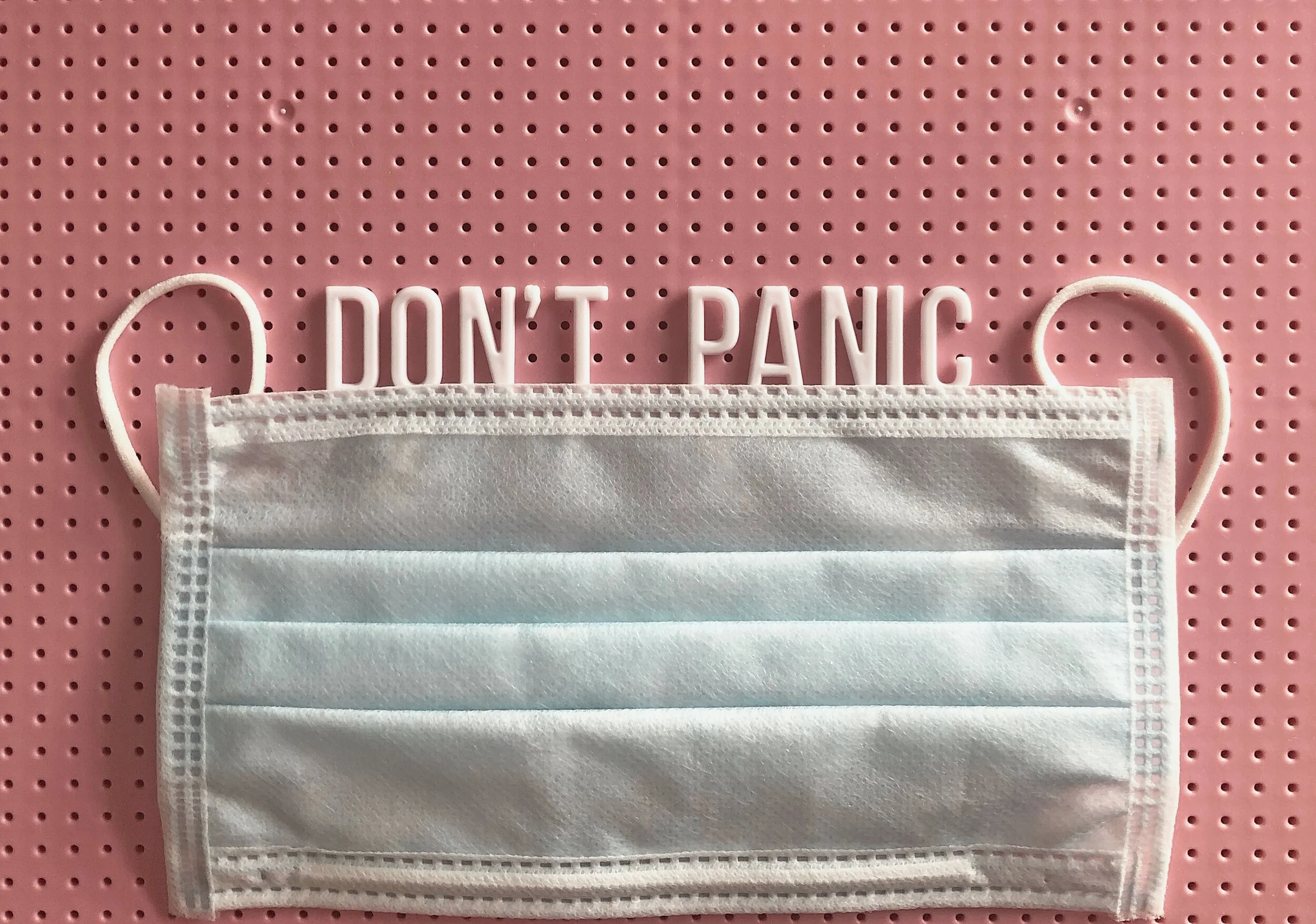
Don’t Panic ! What are teenagers really feeling during the pandemic? The following are comments of teenagers and young adults :
“I could barely get up. I would have like six mental breakdowns a day,"
“I don't think I've left my computer other than to get some food,"
That's all we are looking at every single day, is a screen of some sort and it can affect your mind in a bad way,”
“When you have nothing to do and you’re stuck, you feel alone all the time,”
More than 50 percent of teens said their mental health is much worse since the pandemic. More than 50 percent said their social life is worse and over 72 percent said the coronavirus has created a disadvantage for their generation.
These statements and statistics tell us how bad the problem is, so what do we do now?
We become resources for our teens. We connect our teens to counselors and support in the community. We open our eyes to the problem, and join together to make a change. We don’t panic, we never give up ! Interested in teen counseling? Call Natalie Teeters at ( 720) 795-4914.
Teenagers.....
Parenting a teenager is not cut & dry. Nights spent worrying about your teen’s behavior changes, if they’re too social, or not social enough, dealing with school problems alright, or if their anger is too much for their age. The teenage years can be challenging, but not only for parents. It’s often helpful to look at what the pro’s say about teens to give us adults a different perspective.
First, rebellious teen behavior could stem more from biology than stubbornness, says Yurgelun-Todd.
"Don't assume that because you've laid out the argument or presented the idea that teenagers are interpreting it in the same way you've presented it," she advises. "The frontal cortex is continuing to develop, and if you don't have the neural structure in place, the adolescent cannot really think things through at the same level as an adult.”
In a 2006 study by Silveri, Yurgelun-Todd and colleagues in Magnetic Resonance Imaging (Vol. 24, No. 7, pages 833-841), the researchers found an association between white matter organization and impulse control in both boys and girls. Their findings suggest that white matter in their brain is one of the reasons that teens have difficulty processing information as they should
Next Social Anxiety :
“A lot of teenage behavior is about avoiding this anxiety of feeling left out and not being a part of things," she says.
Isabelle Rosso, PhD, who also works in Yurgelun-Todd's lab, and colleagues reported that as adolescents' abstract reasoning skills increased, so did their levels of social anxiety.
So not only is teenage behavior driven by wanting to avoid anxiety, but as their reasoning increases, their anxiety increases as well.
So next time your teen seems angry, or is acting difficult, maybe consider more could be going on than just bad attitude.
#Adolescent Angst. #Troubling Teen Behavior.# Problems in School. #Anger at Home. #How to help.
